Helping a nervous dog build confidence
Patience, predictability and safe spaces. How confidence grows, and where a private field fits in.
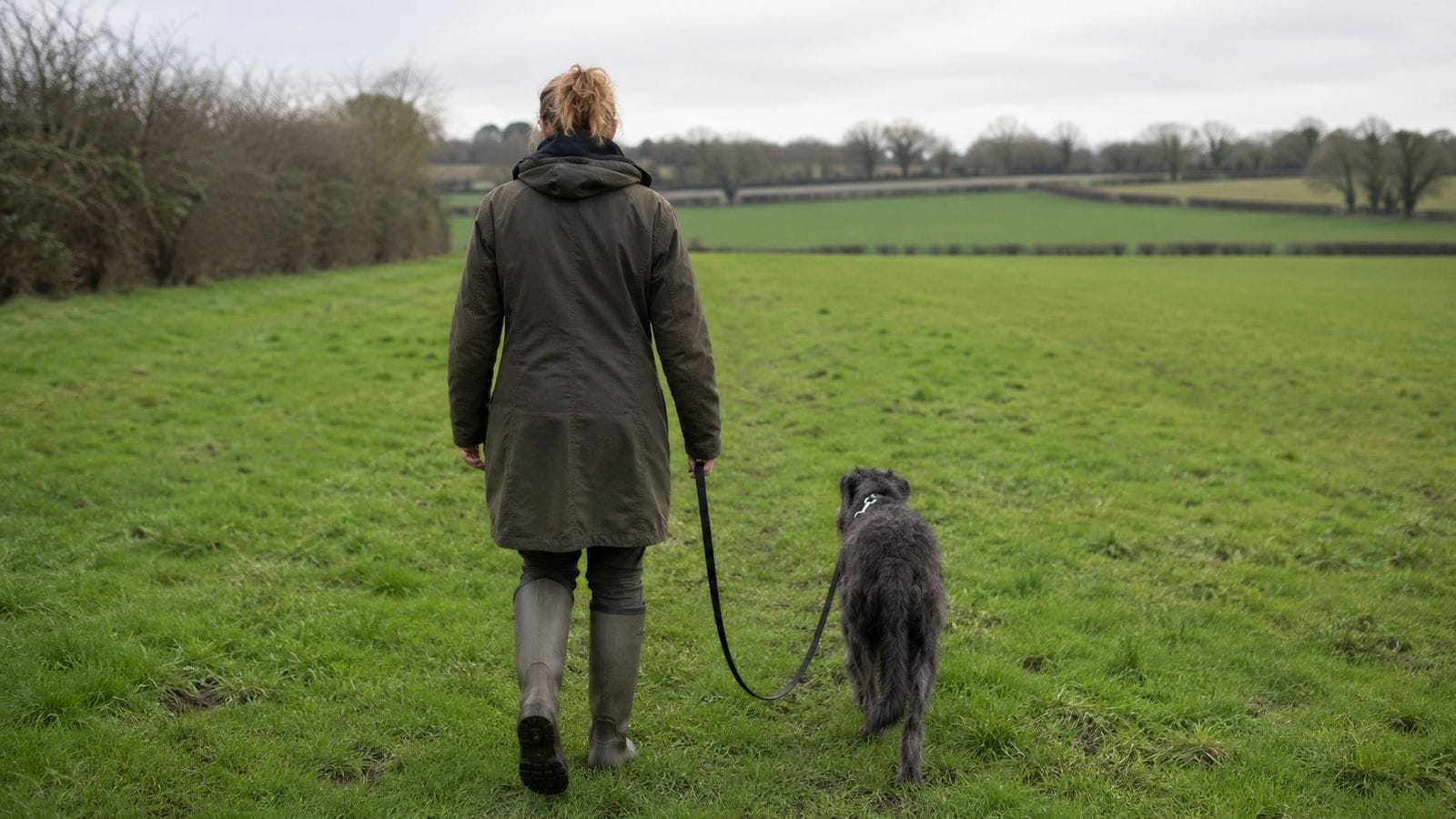
What is in this guide
Some dogs arrive in the world ready to greet it. Others hang back: the rescue who flattens at traffic, the pup who never quite got the hang of strangers, the older dog who has decided the washing line is a threat. Living with a nervous dog asks a lot of patience, and it can be quietly lonely, because so much ordinary dog life seems built for the confident ones.
The good news is that confidence can grow. Not overnight, and not by force, but steadily, through experiences that end well. Here is the general shape of it, and where a private field can help.
How confidence grows, in plain terms
Dogs learn about the world the way we all do: through what happens next. If new things reliably lead to nothing bad, or better still to something good, the world gets a little less alarming. If new things keep tipping a dog over into fear, the fear gets rehearsed instead. So the whole game is arranging life so your dog has lots of experiences that end well and as few as possible that end badly.
- Let them set the pace. A nervous dog who chooses to approach something scary learns far more than one who is walked up to it. Give them the time, the distance and the option to say no thanks.
- Keep things predictable. Routines are scaffolding for anxious dogs. Same walk, same times, same cues: boring to us, deeply reassuring to them.
- Reward bravery, ignore retreat. A sniff towards the scary bin gets quiet praise or a treat. A retreat gets no fuss at all, just space. Never punish fear: it does not make dogs braver, only quieter about being scared.
- Protect their wins. One bad fright can undo weeks of gentle progress, so shielding your dog from overwhelming situations is not coddling, it is training strategy.
One important flag before anything else: if your dog's nervousness is severe, sudden, or getting worse, talk to your vet first, because pain and illness can look like anxiety. And for ongoing fearfulness, a qualified behaviourist is worth every penny. Look for accredited practitioners through bodies such as the APBC or ABTC, and treat this guide as general knowledge, not a treatment plan.
Why a private field helps nervous dogs
Public spaces are unpredictable by nature, and unpredictability is exactly what a nervous dog finds hardest. A private, secure field flips that on its head:
- Nothing unexpected. For your booked hour there are no other dogs, no joggers appearing from nowhere, no surprises over the hedge. Your dog can finally drop the lookout duty.
- Freedom without risk. Many nervous dogs rarely go off lead because a fright could send them running. Inside a secure fence, they can explore at full liberty while staying completely safe.
- Room to be a dog. Sniffing, pottering, rolling and the occasional undignified zoomie are all confidence food. An empty field is one of the few places a worried dog can do them undisturbed.
- A controllable classroom. Whatever plan you are following with a behaviourist, a private space gives you somewhere to practise it without the world barging in mid-session.
Making field visits work for a nervous dog
Keep first visits low-key. Arrive calmly, let them explore on a long line if full freedom feels like too much, and do not fill the hour with plans. Sitting on the grass while your dog makes small brave loops around you is a perfectly successful session. Choose quieter time slots, favour fields with parking close to the gate so the arrival is short, and consider smaller, cosier paddocks which many nervous dogs find less overwhelming than open acres.
Then repeat. The same field, again and again, is the trick most people miss. Familiar smells and a familiar routine turn the field into a known-safe place, and dogs carry that confidence with them. Owners often notice the biggest change not at the field but at home: a dog with a weekly hour of real decompression has more slack in the rope everywhere else.
Finding a calm hour near you
Every field on Rompo is booked for one household at a time, with fencing shown on the listing. Browse Kent, Surrey, Hampshire and Essex, or search from the home page. If your dog's worry shows up as barking and lunging, our reactive dogs guide is the companion read, and your first field visit covers the practical bits. If the weekly hour becomes a fixture, the Rompo Pass turns it into one monthly payment, with free cancellation cover for the days it does not suit.
Nervous dogs are not broken confident dogs. They are careful souls in a loud world, and they flourish when someone stacks the odds gently in their favour. A quiet field with a shut gate is one of the kindest odds you can stack.
Read next
Secure fields for reactive dogs
Why a private field changes the walk for a dog who cannot cope with meeting others, and how to make the first visits count.
Your first secure field visit
What happens when you book, what to bring, and how to make the hour worth it.
Recall training in a private field
Off-lead practice without the risk. How a fenced acre turns recall from a gamble into a routine.